Morning Tea In Guangzhou,
Decoded
早茶 is the most useful thing to understand before you eat in Guangzhou, and almost every English page gets it wrong. It is not breakfast with dumplings. It is a leisure institution with heritage protection behind it — and the tea comes first.
The rule worth publishing: be seated by 08:00 on a weekday and you get the real thing without a queue. Peak and best is 07:00–11:00; weekend 08:00–09:30 is the most atmospheric but queues at famous branches run 45–90 minutes. The convention is 一盅两件 — one cup of tea, two items — and the verb is 饮茶, yum cha; 点心 is the food. Budget ¥50–150 per person plus a tea seat fee of ¥3–20pp and 5–10% service. The real barrier is not money, it is the ordering system, and there are three of them.
What 早茶 actually is, and why locals do not eat it daily
Tea first, food second. Retirees hold tables for two or three hours with a newspaper. Tourists over-index on it; locals treat it as a weekend leisure ritual, not fuel.
The convention is 一盅两件 — one cup, two items. The verb is 饮茶, yum cha: drink tea. The tea is charged per head (茶位费, ¥3–20), silently refilled whenever you flip the pot lid open, and acknowledged by tapping two fingers on the table (叩手礼) when someone pours for you. Learn those two gestures and half the room warms to you.
Timing tiers, honestly: 06:00–07:00 is the old-school opening; 07:00–11:00 is peak and best; 11:00–14:30 is lunch tea; 14:30–17:00 only the all-day chains keep serving; and 17:30–22:00 is 夜茶, night tea — a real Guangzhou thing, but the variety drops 30–50%.
Trolley carts are essentially extinct here — a few heritage revivals at weekends, nothing you can plan around. Ordering is either the classic paper tick-sheet (点心纸, items in price tiers 小/中/大/顶/超点, tick with a pencil) at the old houses, or a Chinese-only WeChat mini-program at the chains. The mini-programs are the single biggest friction point for foreign visitors — which is exactly why one guided morning pays for itself.
What to order, and how to judge it
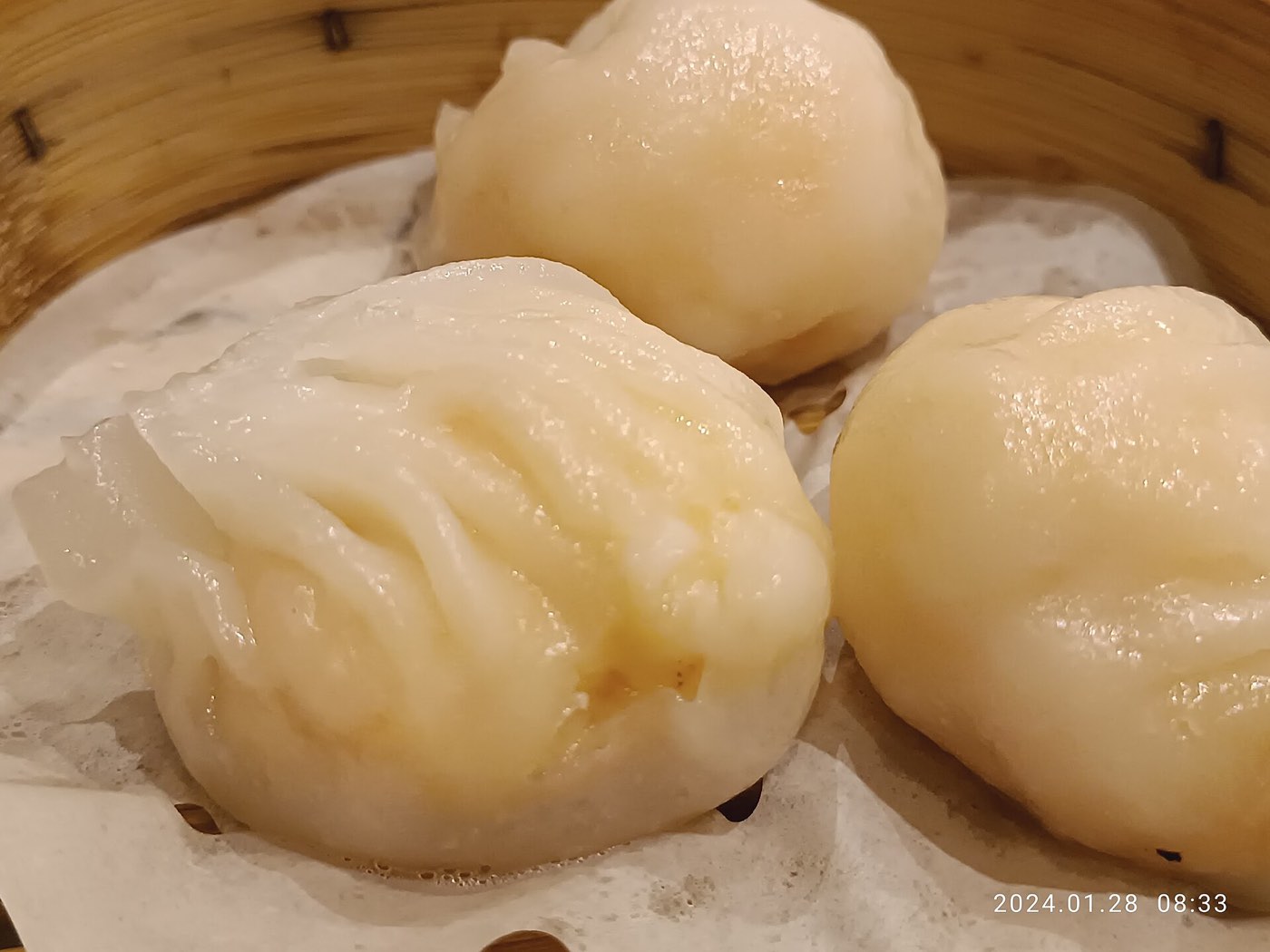
The four heavenly kings are har gow, siu mai, char siu bao and the egg tart. The benchmark test is har gow.
| Dish | What it is | The test |
|---|---|---|
| 虾饺 har gow | Whole-shrimp crystal dumpling | 13 pleats by tradition; translucent but not tearing; the shrimp should snap |
| 烧卖 siu mai | Open-topped pork and shrimp dumpling | Springy, not dense; roe or crab on top |
| 叉烧包 char siu bao | Barbecue pork bun | Should crack open in a three-way smile |
| 红米肠 | Red-rice noodle roll — the Guangzhou signature | Crisp inside the silk; most visitors never order it |
| 炸两 | Fried dough stick wrapped in rice noodle | The best texture play in Cantonese breakfast |
| 凤爪 · 糯米鸡 · 萝卜糕 | Phoenix claws, lotus-leaf sticky rice, turnip cake | The local order on every other table |
At the famous old houses: har gow ¥28–48 a basket, siu mai ¥25–42, ribs and claws ¥30–55, plus 5–10% service (not a tip) and a 10–20% holiday surcharge. A neighbourhood 茶楼 runs ¥30–60 a head all-in.
The tea house, hour by hour
The whole decision is arrival time. Weekday before 08:00 wins every time.
★ Be seated by now on a weekday and you skip the queue entirely.
One guided morning fixes the ordering problem for good
The barrier is the tick-sheet and the mini-program, not the money. Have both decoded once and every later meal is a ¥50 solo outing.
Morning tea questions people actually search
What time should I go for morning tea in Guangzhou?
Be seated by 08:00 on a weekday. Peak and best is 07:00–11:00. Weekend 08:00–09:30 is the most atmospheric but the famous branches queue 45–90 minutes — take a ticket, or go at 07:30 to Panxi and have China's largest garden restaurant nearly to yourself.
How much does dim sum cost in Guangzhou?
A neighbourhood tea house runs ¥30–60 (about $4–8) a head. The famous old houses — Taotaoju, Guangzhou Restaurant, Panxi — run ¥80–180. Tourist-strip rooms charge ¥200–450 for the same four baskets, which is the thing to avoid, not the tea seat fee of ¥3–20 that every house legitimately charges.
Do Guangzhou tea houses still use trolley carts?
Essentially no. The carts survive only as occasional weekend heritage revivals. You will order from a paper tick-sheet at the old houses or a Chinese-only WeChat mini-program at the chains — bring a camera-translation app, or pick Dian Du De, which has picture menus.
What is the finger-tapping thing at Cantonese tea?
叩手礼 — tap two bent fingers on the table when someone pours your tea. It is a silent thank-you, and the one piece of etiquette worth learning before you go. The other: flip the teapot lid open and staff will refill it without being asked.
What is night tea?
夜茶 — the same dim sum service from about 17:30 to 22:00 at houses that keep it. It is a genuine Guangzhou tradition and a lower-pressure first attempt, but expect 30–50% less variety than the morning steamers.